
Sanjiv Mehta, chairman of the country's largest consumer goods company, HUL, believes that the second wave of the Covid-19 pandemic between April and June this year has been a mere pause in India's consumption story, and that it will not change the country's overall growth trajectory. India is poised for growth, especially in the fast-moving consumer goods (FMCG) sector, Mehta told shareholders at the company's annual general meeting on Tuesday. The signs of recovery are becoming evident with many states lifting lockdown restrictions in recent weeks.

Rising prevalence of work-from-home and e-learning is driving sales of notebooks and tablets for most brands, but Apple's superior performance has more to do with its product quality.

Apple was a fringe player in all key categories like smartphones, notebooks, and tablets till recently. But with the last quarter's record-breaking performance, the brand has established itself in the country's price-sensitive consumer electronics market.
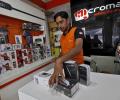
According to research firm IDC, a slowdown in smartphone shipments began showing up as early as late February, though companies insist that the March quarter was fine, albeit on a low base.

US proposal to raise the global corporate tax rate to 28% from 21% might face resistance from countries unwilling to give up their edge and compete with America on its terms.

While the record shipments reflects the prevailing mood at the time, the exponential rise in Covid cases in the country has turned the tide since.

From trucks lined up and waiting in the area to local vendors, the scenes tell a story of livelihoods stalled.

The new iMac, two iPads and iPhone 12 and 12 Mini will be open for ordering starting April 30, just like in the US, the UK, China and Japan.

Booked between 2007 and 2011, out of the total 32,700 residential units under various Jaypee Infratech (JIL) projects, at least 20,000 homes are yet to be delivered. Supreme Court documents show that, till last March, Jaypee had issued 7,997 offers of possession to homebuyers while executing only 6,530 sub-lease deeds. These deeds offer homebuyers possession rights but, unlike registration, does not guarantee absolute ownership.

'There are obvious concerns regarding revenue leakage which is understandable, but there are also concerns about whether or not well accepted, judicially tested, fair and proper procedures are being followed during such arrests.'

However, the department has not changed ITRs significantly, considering Covid-19 crisis.
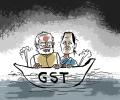
CAG recommended fixing a definite time frame for rolling out simplified GST return forms.

The Cabinet has cleared a Bill to set up a government-owned development finance institution (DFI) with initial paid-up capital of Rs 20,000 crore so that it can leverage around Rs 3 trillion from the markets in a few years to provide long-term funds to infrastructure projects as well as for development needs of the country. To put it in perspective, Rs 3 trillion constitutes slightly less than 3 per cent of the Rs 111 trillion to be spent on over 7,000 projects in the National Infrastructure Pipeline from 2019-20 to 2024-25. Besides, the government will give Rs 5,000 crore as grant to the institution, Finance Minister Nirmala Sitharaman on Tuesday told the media after the Cabinet meeting.

India's Rs 4.5-trillion fast-moving consumer goods (FMCG) sector was one of the first to bounce back from the lockdown induced blues, reporting a year-on-year (YoY) growth in the October-December quarter last year. That said, the overall consumption figures continue to remain depressed. The FMCG market, which includes daily consumables like branded atta, hand sanitizers, edible oils, shampoos, razors, and so on, recorded 7.3 per cent value growth during the period, while the smartphone market grew by 21 per cent.

The apex court has settled the long-pending dispute between companies such as Samsung, IBM, HP & others and the tax department.

Taking lessons from that, I would think seamless digital payments is something you have to clearly have a roadmap for, the FM said.

Apart from bringing new suppliers on board, Xiaomi is also hoping to take advantage of the newly launched PLI scheme that offers incentives on incremental production of smartphones with 2020 as the base year.

Working hours cannot go beyond 48. Those who give a four-day week will have to provide three consecutive holidays after that.

Expansion of distribution network, venturing into new markets, supplementing production capacity, and ramping up workforce are all on the cards. Instead of trying to fight with brands having massive war chests, it will pass on the benefits to consumers by offering them phones at lower prices.

'Pump prices of petrol and diesel have reached historical highs. An unwinding of taxes on petroleum products by both the Centre and the states could ease the cost-push pressures,' the Monetary Policy Committee (MPC) has said.
 © 2025 Rediff.com - Investor Information - Advertise with us - Disclaimer - Privacy Policy - Sitemap - Feedback - About us - Terms of use - Grievances